
Not to burden you with too many book reviews in a row, but I just read Cradle to Cradle, by William McDonough and Michael Braungart, and found one concept in their book particularly interesting. The book primarily addresses how products, buildings, and systems can be designed to be beneficial for the earth, the population, and the economy, rather than harmful or just "less bad". It doesn't deal much with composting, but their concept of technical vs. biological nutrients is incredibly relevant.
Ideally, in the human world we would treat our resources like the natural world, where everything cycles through different systems; the waste of one system is food for another. This isn't the case, even when one considers the growing recycling industry, but we could easily make it so by viewing all materials as either technical or biological nutrients. Biological nutrients are things that are compostable and can be fed back into the natural world as a nutritious, safe resource for plants and animals. Technical nutrients are things that can be fed back into the industrial system endlessly to be reused to make new products.
Currently our recycling system is flawed, as much of what we recycle is actually "down-cycled" into products of lesser quality. I definitely need to do more research on this subject, but basically the adding of dyes, paints, or solvents to a material contaminates it when it comes to future use. So if you have a green soda bottle, that plastic is still recyclable, but only as a different, usually lower-quality product.
 There are exceptions to this, but system-wide we don't have a good method for recycling materials into products of equal quality and value. Even materials which should be easy to recycle, like metal, are often contaminated because of current recycling methods. For example, aluminum soda cans are often lined in plastic, and cars are crushed into a large block of material, rather than being disassembled to retrieve their copper, steel, and other resources.
I have a whole rant building on how we need to recycle better, design products and packaging with their reuse and recycling in mind, and how the plastics industry is particularly troublesome, but that's an article that needs a lot more thought, research, and calmer state of mind. So what I want to talk about is biological nutrients, and how important it is to separate them out from (what should be) technical nutrients.
As it stands now, unless you participate in some sort of recycling program, technical nutrients and biological nutrients are mixed together in your trash, then buried in the ground at a landfill where they are sealed off from soil and air. What this means is that even the biodegradable waste like banana peels and newspapers won't break down because the right aerobic (or air-loving) bacteria won't grow in this environment, and so there's nothing to facilitate the rotting, or composting, process. I wish every city had a composting program and was vigilant about separating out its waste, but this just isn't the case.
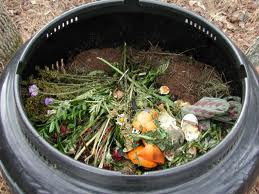
If the city won't do it, it's up to the citizens to make it happen. By all means write letters to your mayor, attend city council meetings, and make phone calls to your city's waste management department, but in the mean time, take matters into your own hands and start composting. Put everything you can into your home compost bin. If you know of neighbors or apartment dwellers who are unable to compost, offer your bin to them as well, it will only enrich your compost and make for a more beautiful world.
I think the idea of technical and biological nutrients is brilliant, and I intend to explore it further. But in the mean time, I know exactly what to do with all my biological nutrients to make sure they are returned safely and responsibly to the earth.

